


On Nepali women’s experience of Panchayat Class Organizations
26 June, 2018
On Nepali women’s experience of Panchayat Class Organizations
essay
King Mahendra’s Panchayat government had established women’s organizations across the country as one of the seven official “class organizations”. After the coup of 1960, these class organizations were a key tactic in displacing the political fervor of the democratic movement. For the Panchayat government, these state-sanctioned organizations were a way to co-opt popular participation, control […]



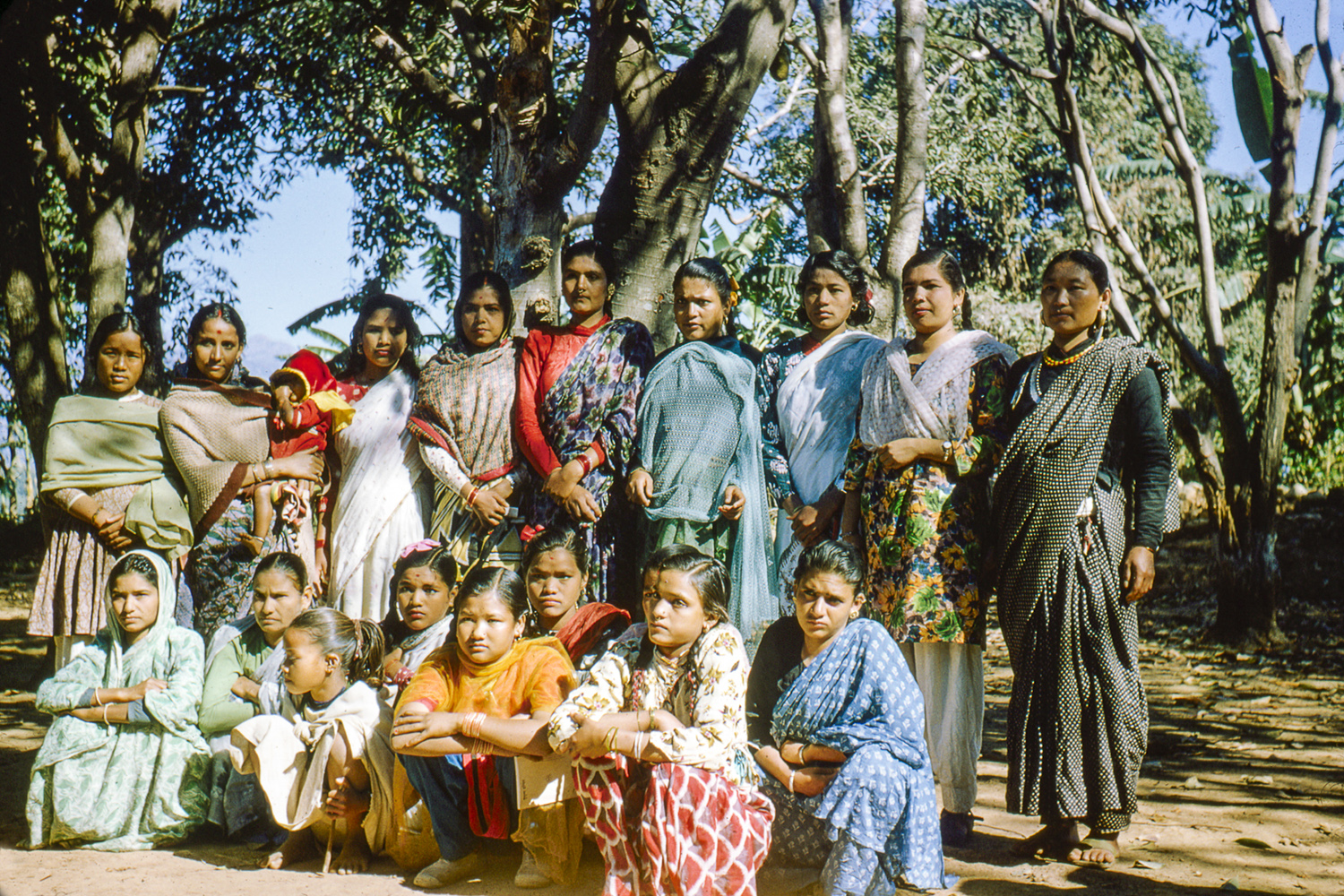
Dang, 1965. Members of the village Panchayat women’s organization in Dang Deukhuri. Photo by Jay Cross/Nepal Peace Corps Photo Project
King Mahendra’s Panchayat government had established women’s organizations across the country as one of the seven official “class organizations”. After the coup of 1960, these class organizations were a key tactic in displacing the political fervor of the democratic movement. For the Panchayat government, these state-sanctioned organizations were a way to co-opt popular participation, control opposition, and reproduce state legitimacy to rule over all spheres of social life in Nepal. The legacy of Panchayat’s women’s organizations, like other class organizations, is chequered, but it played a part in activating women at local and regional levels into exercising representation, self-governance, and accountability. Issues like social welfare, legal aid, education, adult literacy, property rights, economic empowerment, and marriage laws gained early momentum through women’s organizations.
more from the glass plate