


Seeing “The Skin of Chitwan”
15 June, 2023
Seeing “The Skin of Chitwan”
reflection
The Skin of Chitwan exhibition, a part of PhotoKathmandu 5 and held from February 25 to March 31, 2023, delves into the political and ecological reshaping of Chitwan. I was part of the exhibition not as a spectator, or a viewer of artworks but as a guide to the spectators’ eyes. I had volunteered as […]


The Skin of Chitwan exhibition, a part of PhotoKathmandu 5 and held from February 25 to March 31, 2023, delves into the political and ecological reshaping of Chitwan.
I was part of the exhibition not as a spectator, or a viewer of artworks but as a guide to the spectators’ eyes. I had volunteered as a docent for the exhibition.
I had secretly begun taking pictures of my village in Gulmi with my family camera. I would take pictures of hills that surrounded my house, of big trees my uncle had planted at the end of our field, their curly, wavy arms like branches. Of my brother’s bald head during his व्रतबन्ध ceremony. All this using the family camera with limited reels meant for taking pictures of red foreheads. My small टुसा of curiosity about photos has followed me since childhood. This sincere accumulation led me to apply for the call for volunteers for the Photo Festival. Despite my interest in photos, I had never made an effort to visit any art spaces the city offered. The resistance also stemmed from my perception of not belonging to these upper echelons.
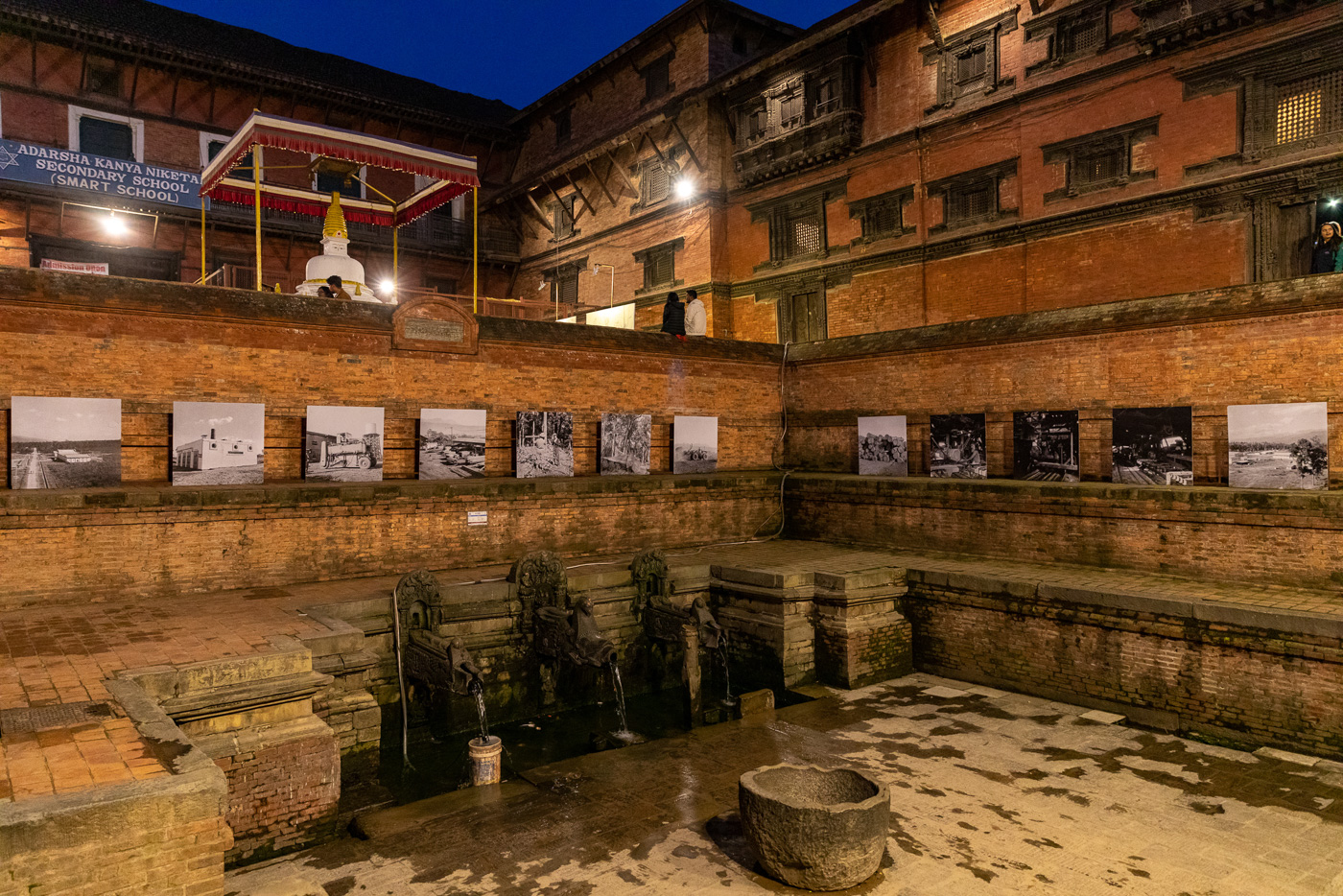
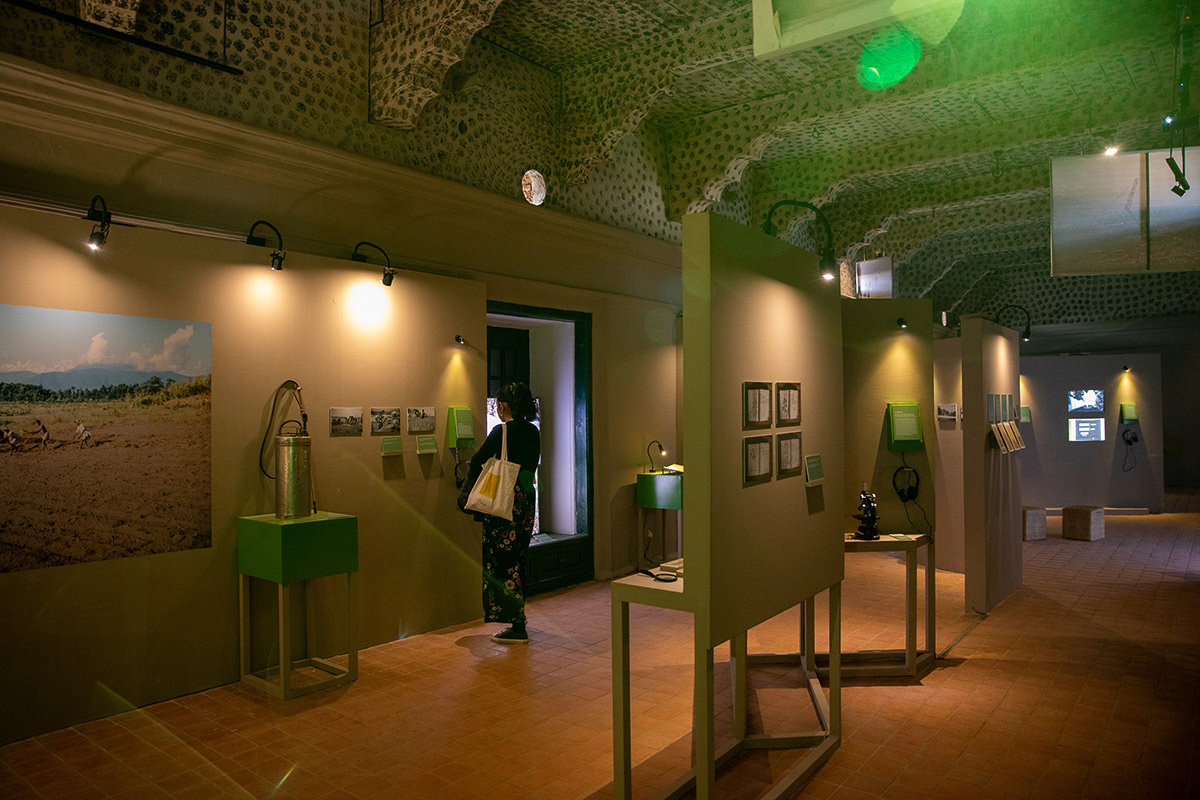
The venue I was assigned was an old building near Krishna Mandir and Adarsha Kanya, the historic all girls school. I’d been there numerous times, but never had the chance to visit inside. Bahadur Shah had built this north wing of the Patan durbar in 1792 CE, which at first glance looked derelict. The entrance greeted me with an eerie image of King Birendra’s prized bounty from a hunt, flanked in the background by elephants and his entourage. Inside, the earthy smell lingered up to wooden stairs to the top floor.
The hall’s high wooden ceiling was covered with leopard print, which made me wonder if the print was as old as the building itself. For the purpose of the exhibition, the windows of the room were covered in black chart paper. The hall was also dimly lit with low powered yellow bulbs fitted below the leopard printed ceiling.This darkness evoked a strange feeling in everyone who first stepped in. Many visitors would stumble initially as their eyes adjusted to this subdued lighting inside.
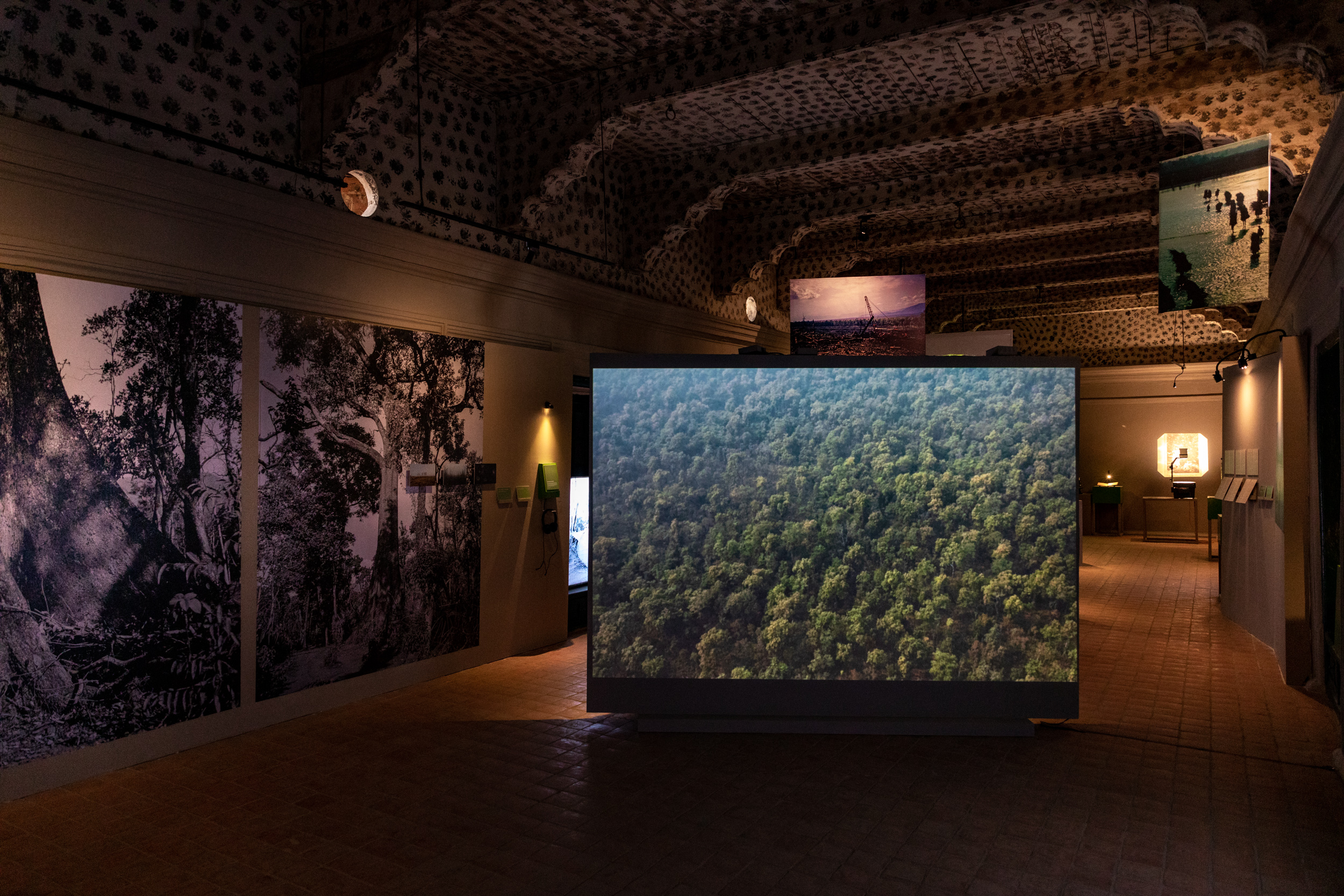
Exhibition View Bahadur Shah Baithak Hall, Skin of Chitwan. Photo: Shikhar Bhattarai
As my days for a month revolved around the exhibition, I became used to not only the physicality but also its contents. I familiarized myself with what the flip books and the captions had to say, which was all part of the work I was doing there. It allowed me to locate where things were and help answer general questions the visitors had. This new stream of narrative about Chitwan compelled me to challenge my pre-existing conceptions.
Chitwan invokes images of rhinos, elephants, national park, and jungle safaris. Known as the tiger central of the country, it’s also famous for nightly Tharu dances and campfires. But what is the identity of a place? Is it defined by its geography, nature, culture, and the inhabitants who live there? Or does it hold different meanings for different people? A place could hold a significantly different meaning. So if the identity of a place is purely subjective, constructed through personal interaction and affiliations with it. Why was it that the most echoed identity of Chitwan is singular?
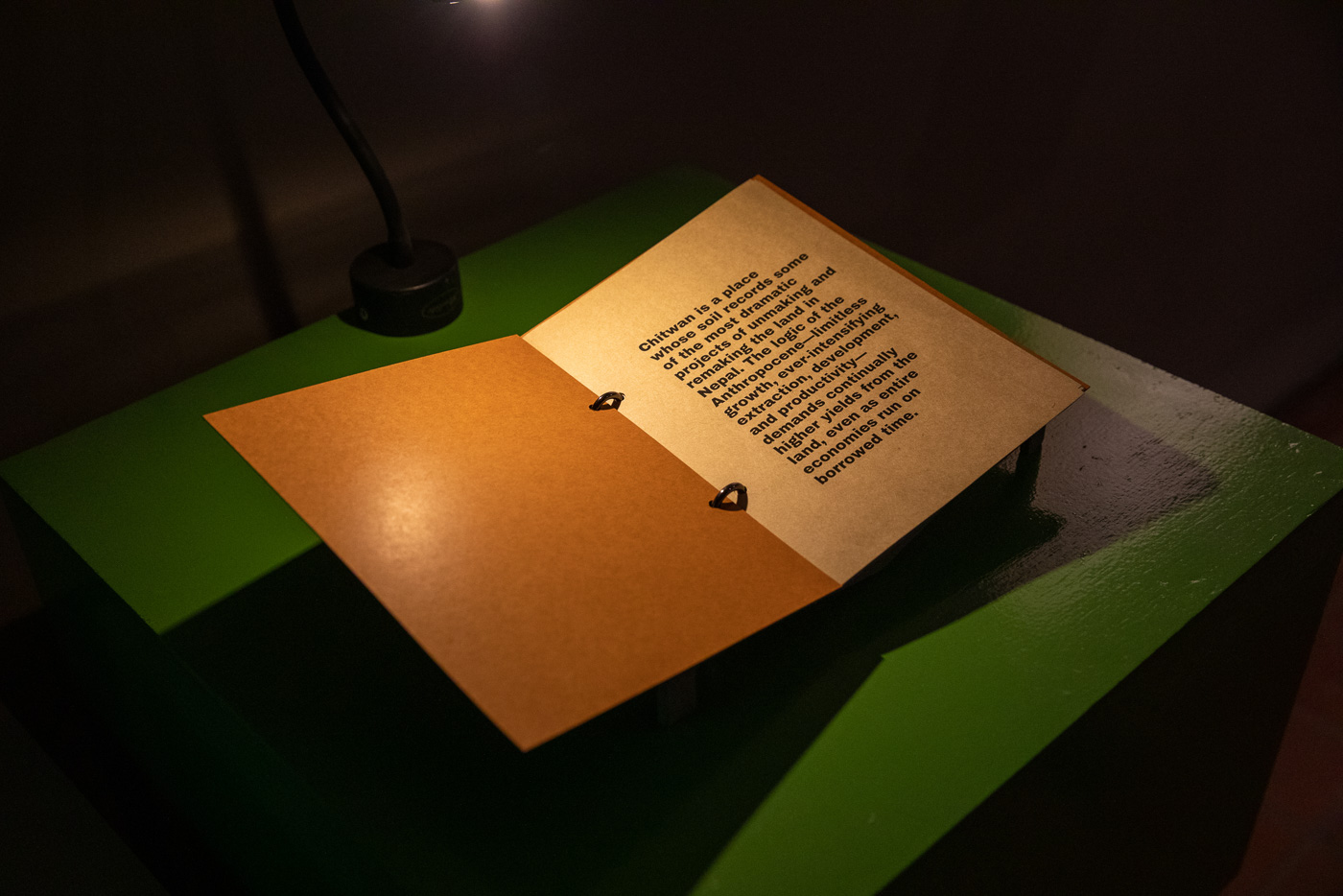
The exhibition encapsulates a Chitwan that roots its identity to indigenous and ecological aspects. By critiquing the cost of modernity, it became a somber awakening to many like me whose perceptions of development were still rooted in the school text book idea where development equates to prosperity for all. I struggled to reconcile with an image of deforestation that was molded into a square box. Standing before this image, I realized my formative education had only shown me the benefits of development, not its costs.
The construction of Mahendra Highway, which cuts through the core of Chitwan highway, emerged as a conundrum to me. How could a catalyst of national connectivity uproot indigenous communities? I couldn’t justify what I was seeing with my education and my theories I have read thus far. I did not know what to make of the destruction. It always felt like Chitwan got the national park as an inheritance from the government. But the knowledge of its creation which had forced the indigenous Tharus to flee either away from the forest or into the forest was grim to learn. A quote from a flipbook read stuck a deep chord in me:

They don’t want the tourists to see many people when they are there to see wild animals in the jungle; they tell us to hide in the bushes when we see elephants and tourists. Why are we going to hide for an hour in the forest?
This state of forced impermanence results not only in loss of land and home but also the loss of cultural memory that was once tied to it. There was a section within the exhibition showcasing different indigenous seeds provided by the seed bank of Chitwan. Many older visitors would often marvel at the indigenous rice seeds, turning the pages of long-forgotten memories, recognizing and naming these different seed variations in their own language. The loss of these seeds symbolize the loss of the language to name them and the traditions to cook them. These material heritage which were once an integral part of the local indigenous lives are now all lost.
This exhibition compels one to look beyond popular narratives echoed in state institutions, media, and elite groups with larger stakes in Chitwan. Chitwan’s identity exists in an amalgamation of popular discourse and the voices of its ecology, repurposed and rebranded. Its people, rendered by everyone in power.
Though one isn’t always compelled to look beyond the surface. My understanding of Chitwan had remained unchallenged, confined within a static bubble of familiar images and associations. These images seemed like the complete picture of what Chitwan had to offer.
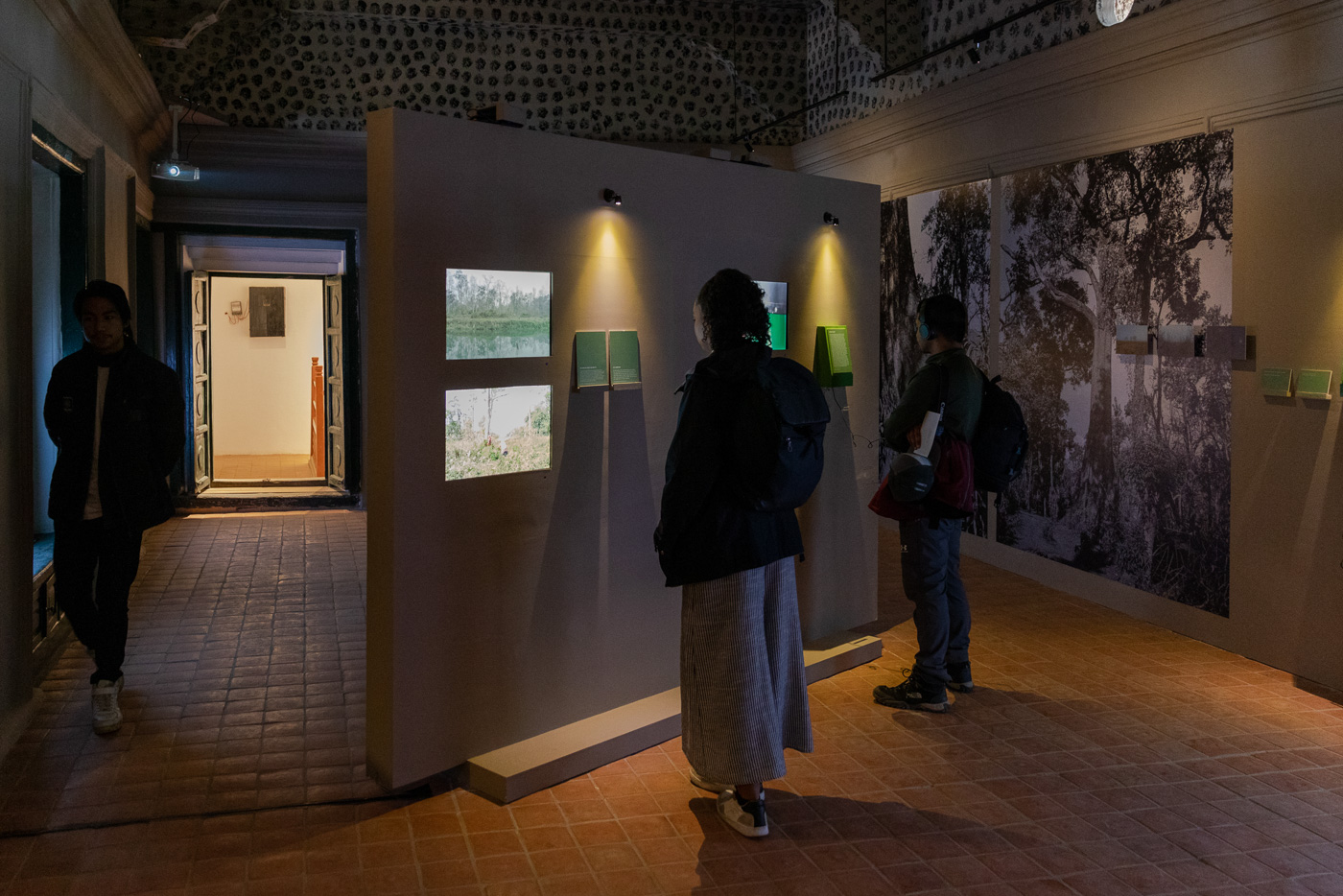
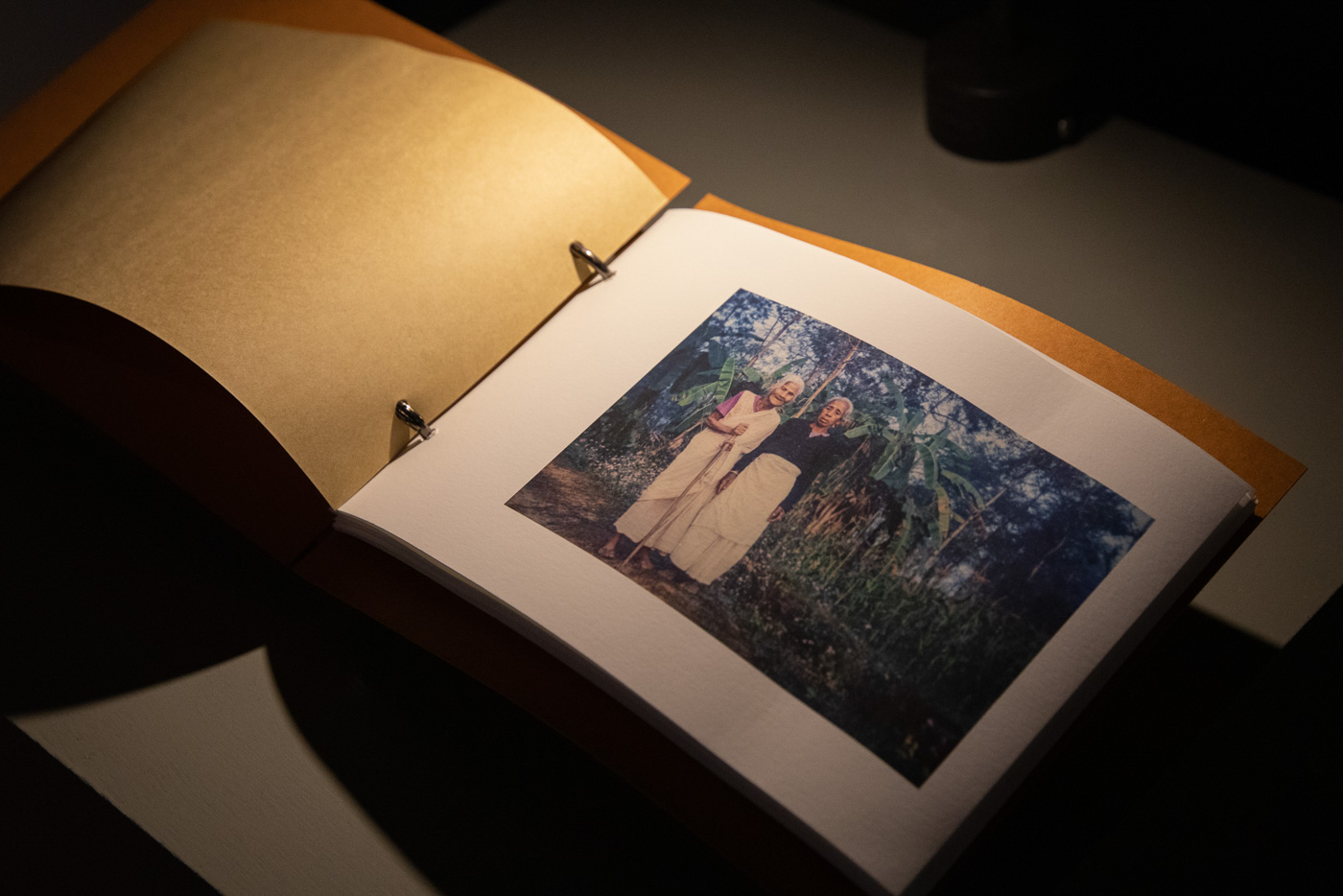
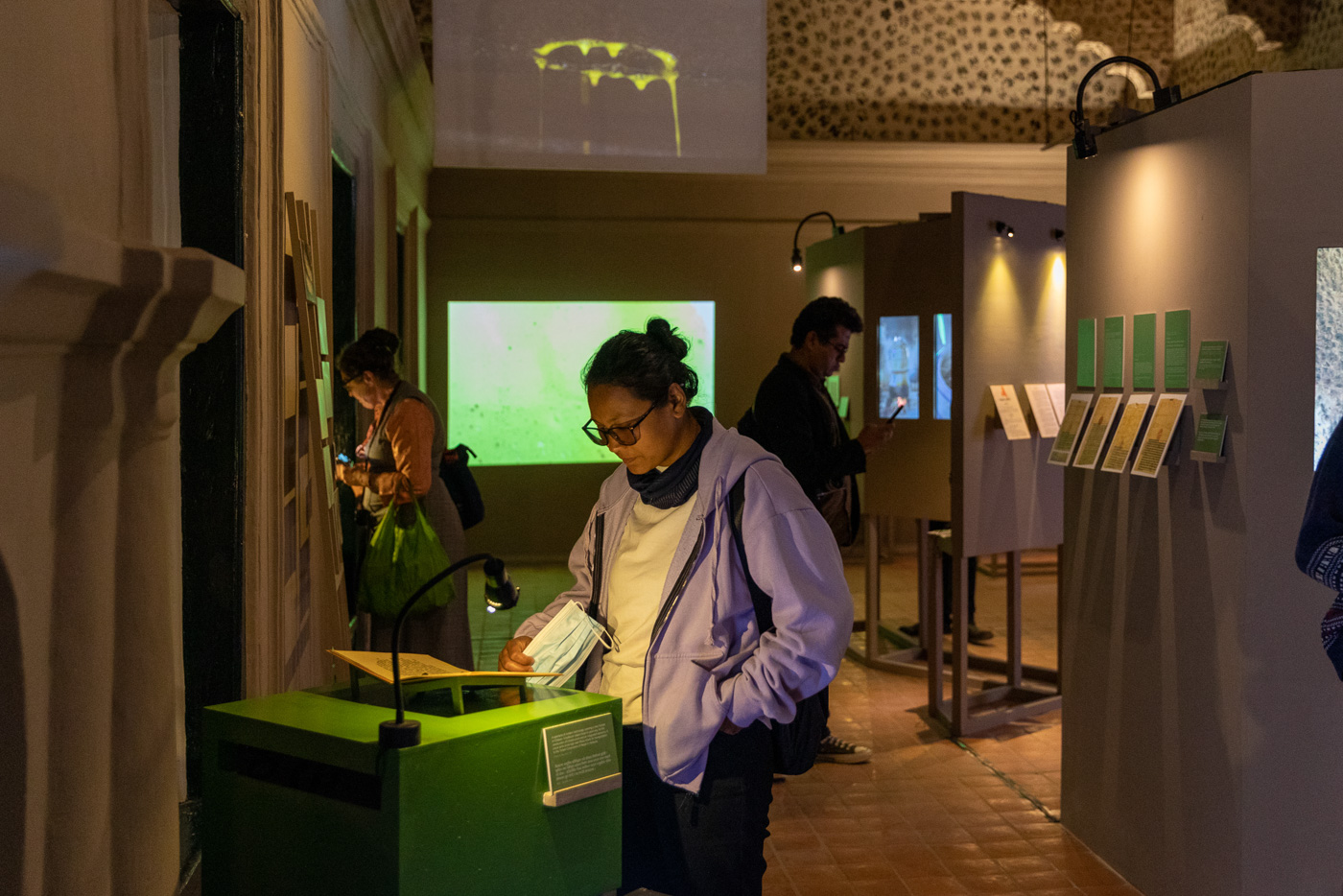
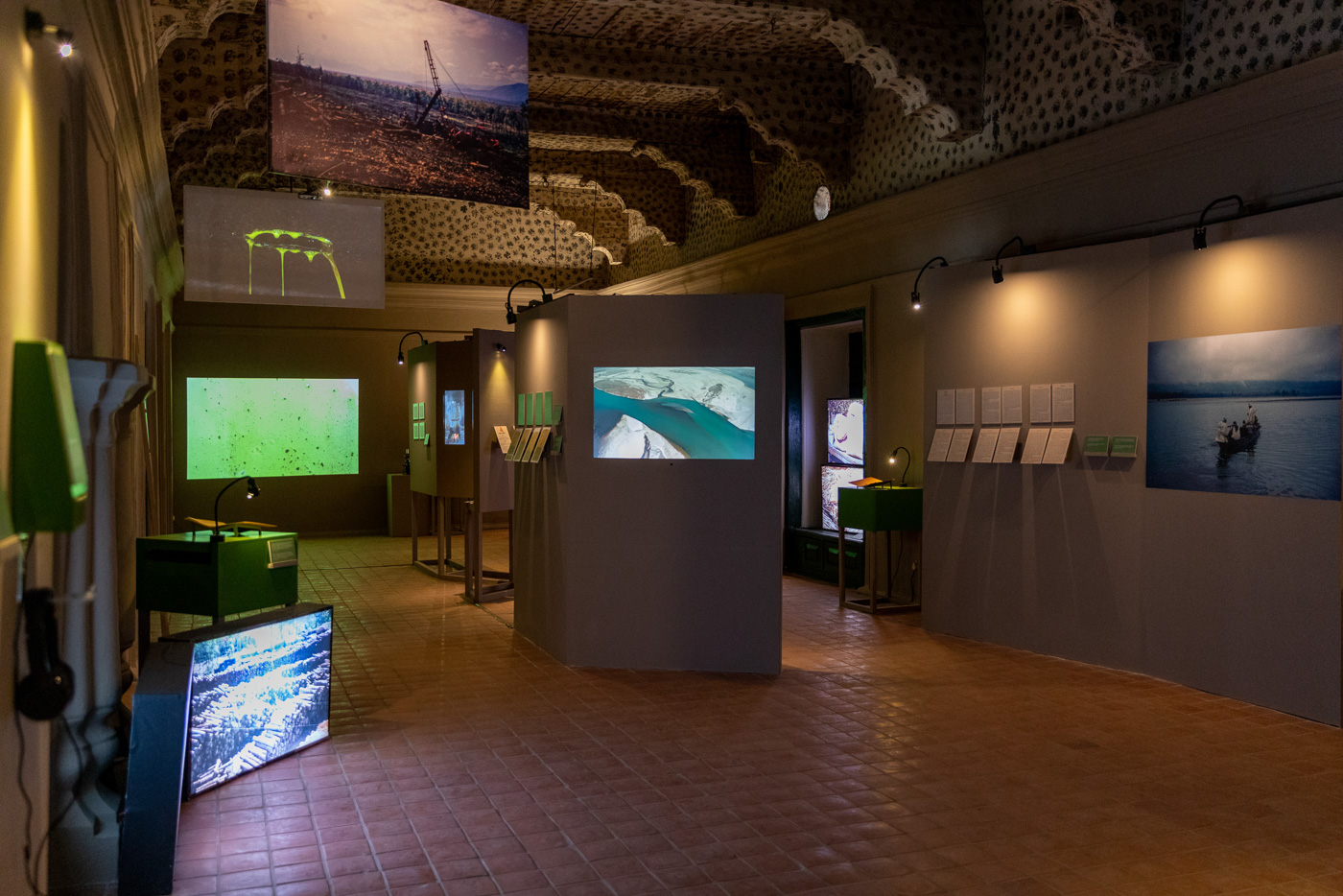
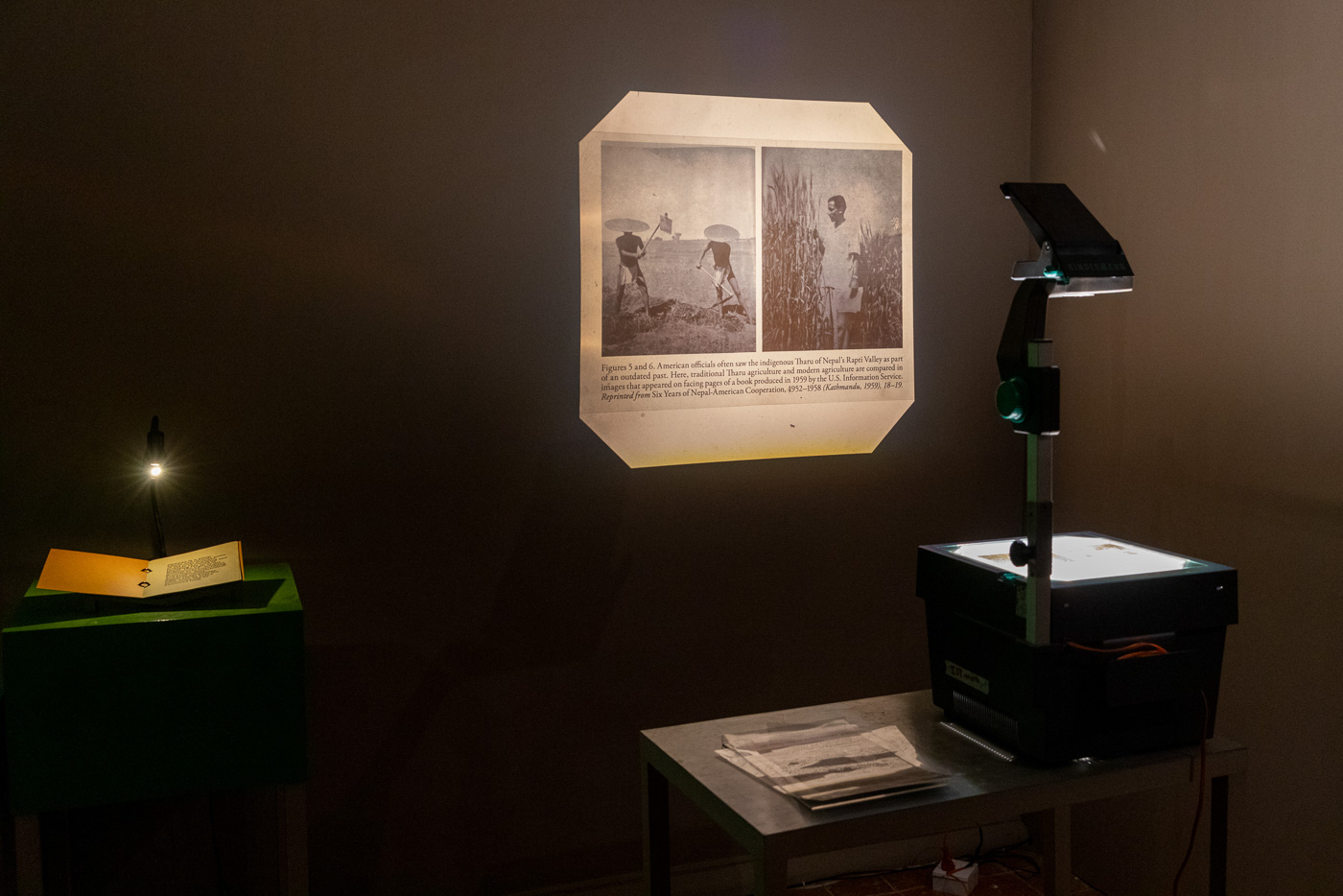
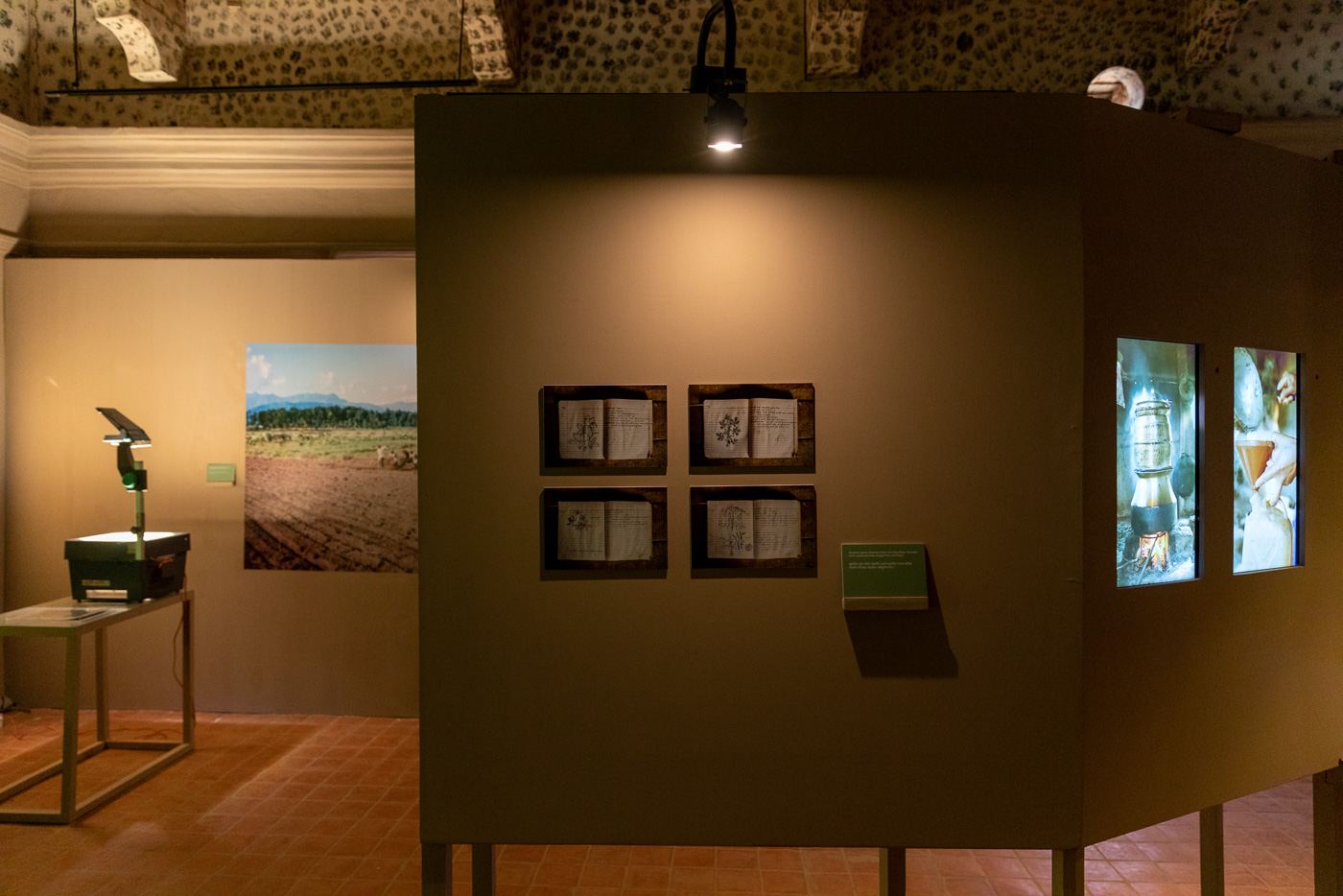
Exhibition Views of Skin of Chitwan at Bahadur Shah Baithak Hall during PhotoKTM5, 2023. Photo: Shikhar Bhattarai
However, this exhibition created an epistemic shift in my perception of Chitwan’s identity.
The exhibition allowed spaces to question who decides the identity of a place ? Like the identity of a person is in a state of flux, always, is the identity of place also multidimensional? Is it also in a state of crisis? Infact, Photo Kathmandu 2023 was themed around questions of prevailing ideas of our relationship with land, with histories and knowledge. It made spaces for the exploration of alternative languages and meanings to provide voice and agency to non-human entities. By naming that which has been lost, we learn to pay attention which allows us to move forward with a sense of care and justice.
I also learned what it means to see and interact with an image. The act of seeing an image is often perceived to be a one way view upon the world. This outward looking at an image makes one forget about the subjectivity that lies beneath it. Those who seek to deconstruct an image, tend to look for clues in isolation of a singular image. As if all the meaning would be encapsulated within an image. Making sense of an image, however, requires looking at a broader context. The exhibition’s contents seamlessly interconnect, forming a cohesive whole. This approach ensured that viewers could grasp the deeper significance of exploring the Skin of Chitwan. I see this experience as understanding an image involves grasping it within the broader exhibition context. Captions become a gateway to it.
For those curious, Skin of Chitwan also exists as an online exhibition. It can be accessed at https://skinofchitwan.nepalpicturelibrary.org/