

Untitled Poem to her deceased husband by Rashmi Rajya Laxmi Shah
2 July, 2018
Untitled Poem to her deceased husband by Rashmi Rajya Laxmi Shah
transcript
My beloved, one day you saw me and I saw you And— You heaped on me the red sun rising in your life. With the paint on the parting of my hair you drew a picture of your essence. The tika on my forehead became a mirror for you. My red cheeks were for you […]



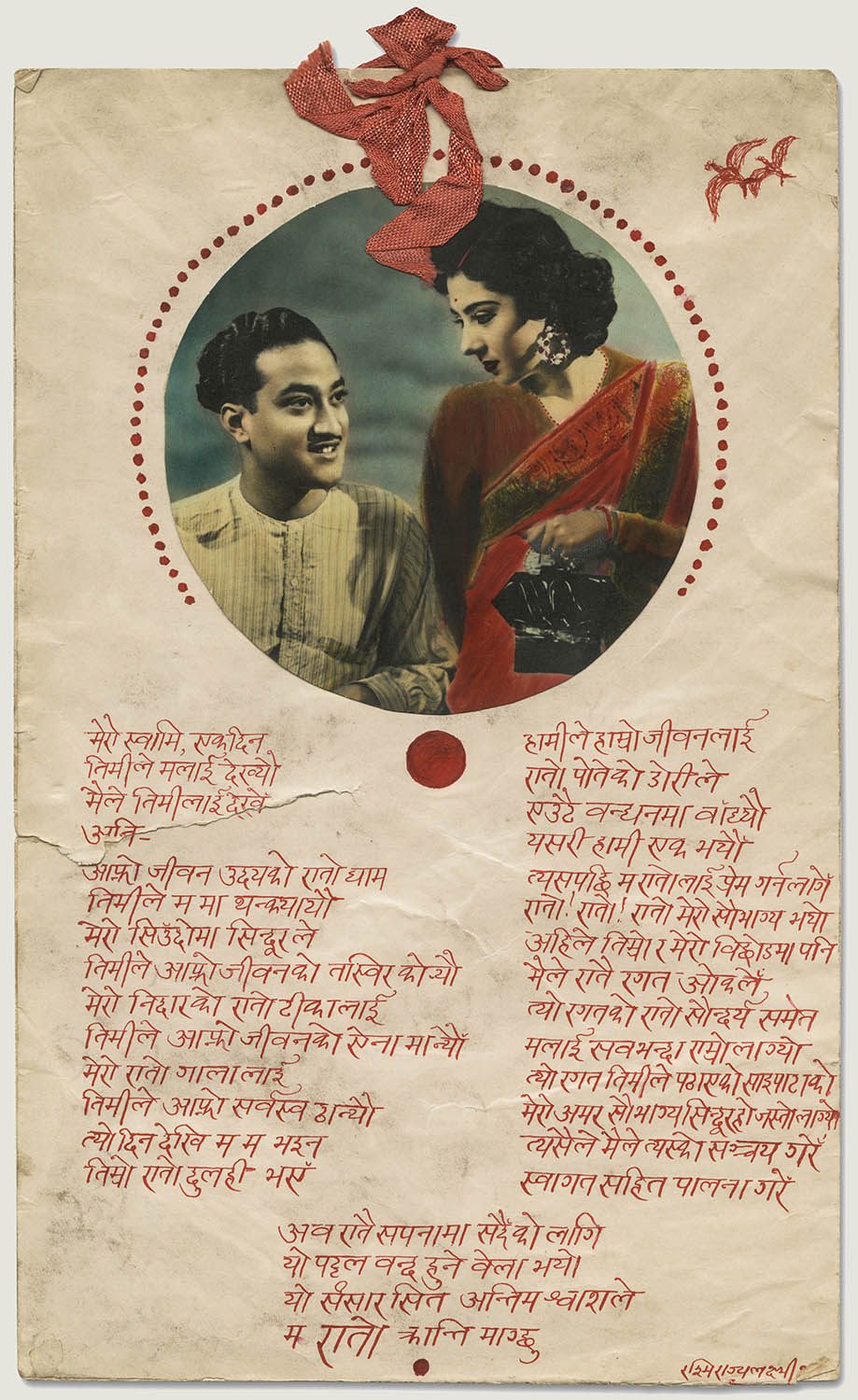
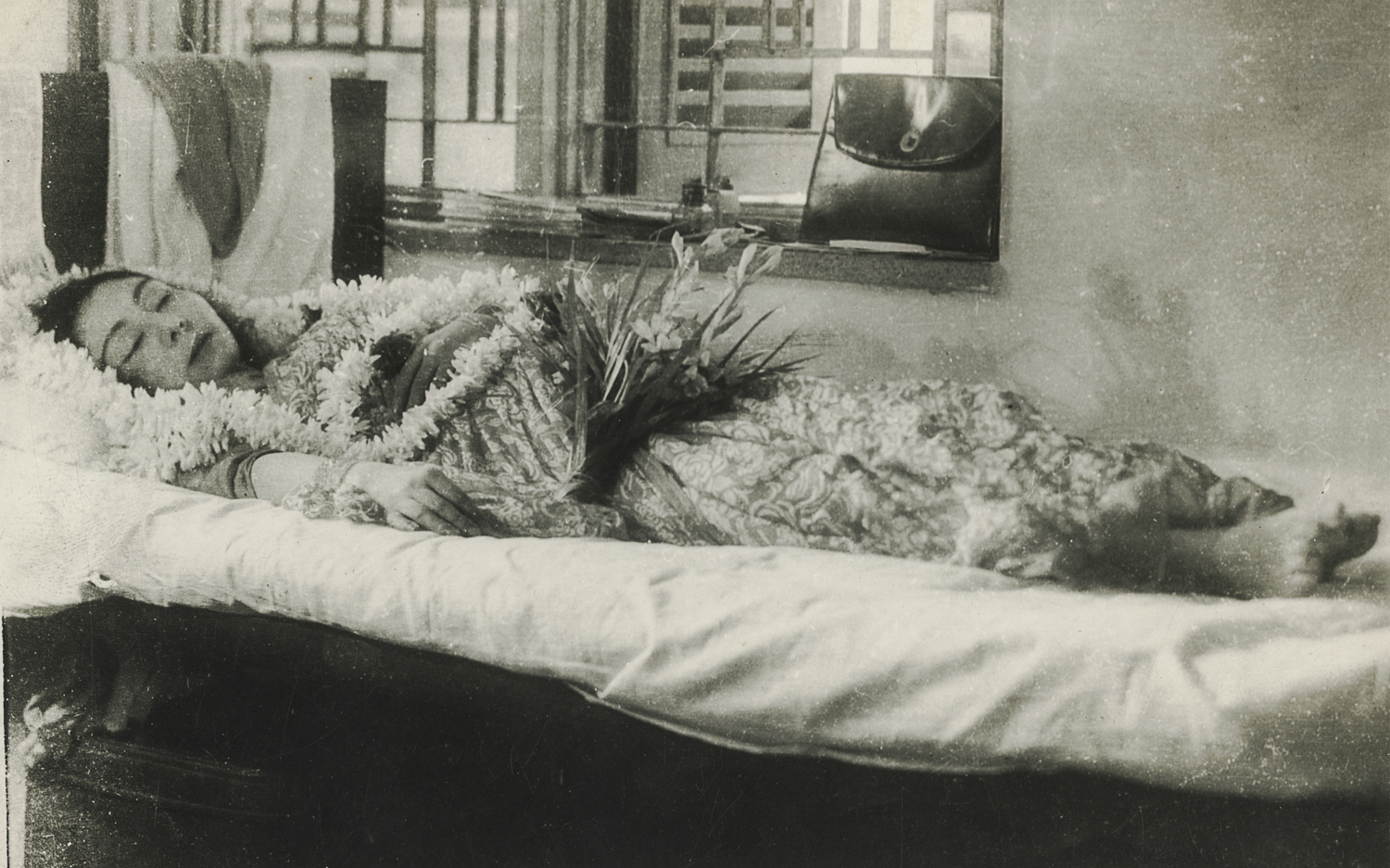
Kolkata, India । 1962
While residing in Calcutta as a political refugee, Rashmi Shah committed suicide in full bridalwear a day before the Teej festival and left a poem in memory of her late husband Jagat Shah. Earlier that year, he was reportedly killed in action by the Nepali Army.
Naveen Prakash Jung Shah Collection
My beloved, one day
you saw me
and I saw you
And—
You heaped on me
the red sun rising in your life.
With the paint on the parting of my hair
you drew a picture of your essence.
The tika on my forehead
became a mirror for you.
My red cheeks
were for you your entire universe.
And from that day onward I lost myself
and became your bride in red.
With the red bead necklace
our lives got entangled.
Thus we became one
and I began to love redness.
Red! Red! Red was my good fortune.
Even with your departure
I embraced the blood-like red.
Indeed I have grown most fond
of the beauty of blood.
That blood which is like the vermilion
you sent to me as your wedding gift.
So I have treasured it,
welcomed it and followed it.
Now forever in the dream for red
these footsteps have reached their end.
With the last breath on this earth
I ask for a red revolution.
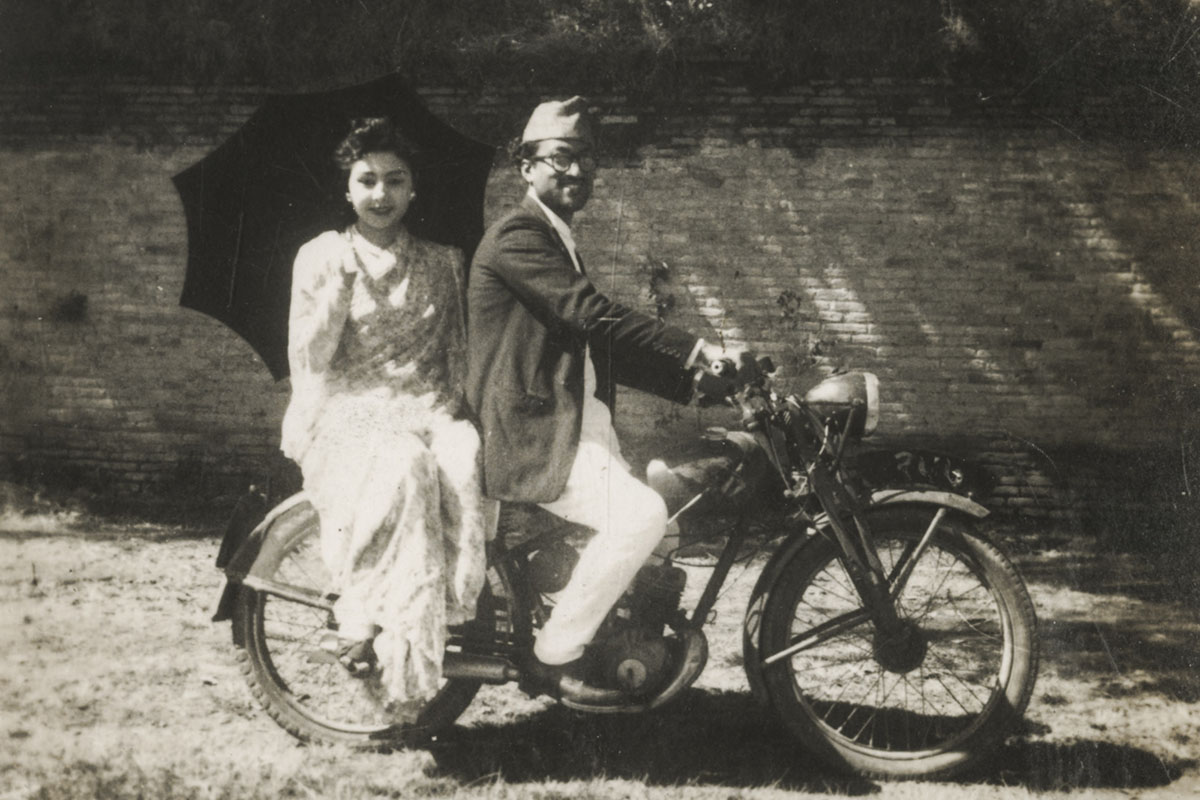
Rashmi Rajya Laxmi Shah, daughter of renowned poet and artist Balkrishna Sama, was a full collaborator along with her husband Jagat Prakash Jung Shah to the anti-Rana democratic movement led by the Nepali Congress. After Jagat Shah was killed in action during a revolt against King Mahendra’s government in 1962, Rashmi Rajya stayed in Calcutta as refugee. Son Naveen Prakash Jung Shah recalls that it was only after the death of her husband that she fully adopted the red insignias of a married woman. The poem above was written sometime before she committed suicide a day before Teej of the same year.


more from the glass plate